Chill Out Rooms & Matteo Manzini
Chill-out rooms emerged in the late 80s and 90s as part of the UK and European rave and club scene, providing a space for clubbers to rest, decompress, and socialise away from the intensity of the main dance floor.

Designed with ambient or downtempo music, soft lighting, cushions, beanbags, and psychedelic visuals, they were an essential feature of early rave culture.
In recent years, our Birthdays and Continuums have featured a chill-out space in Room 2. A place to unwind in the early hours.
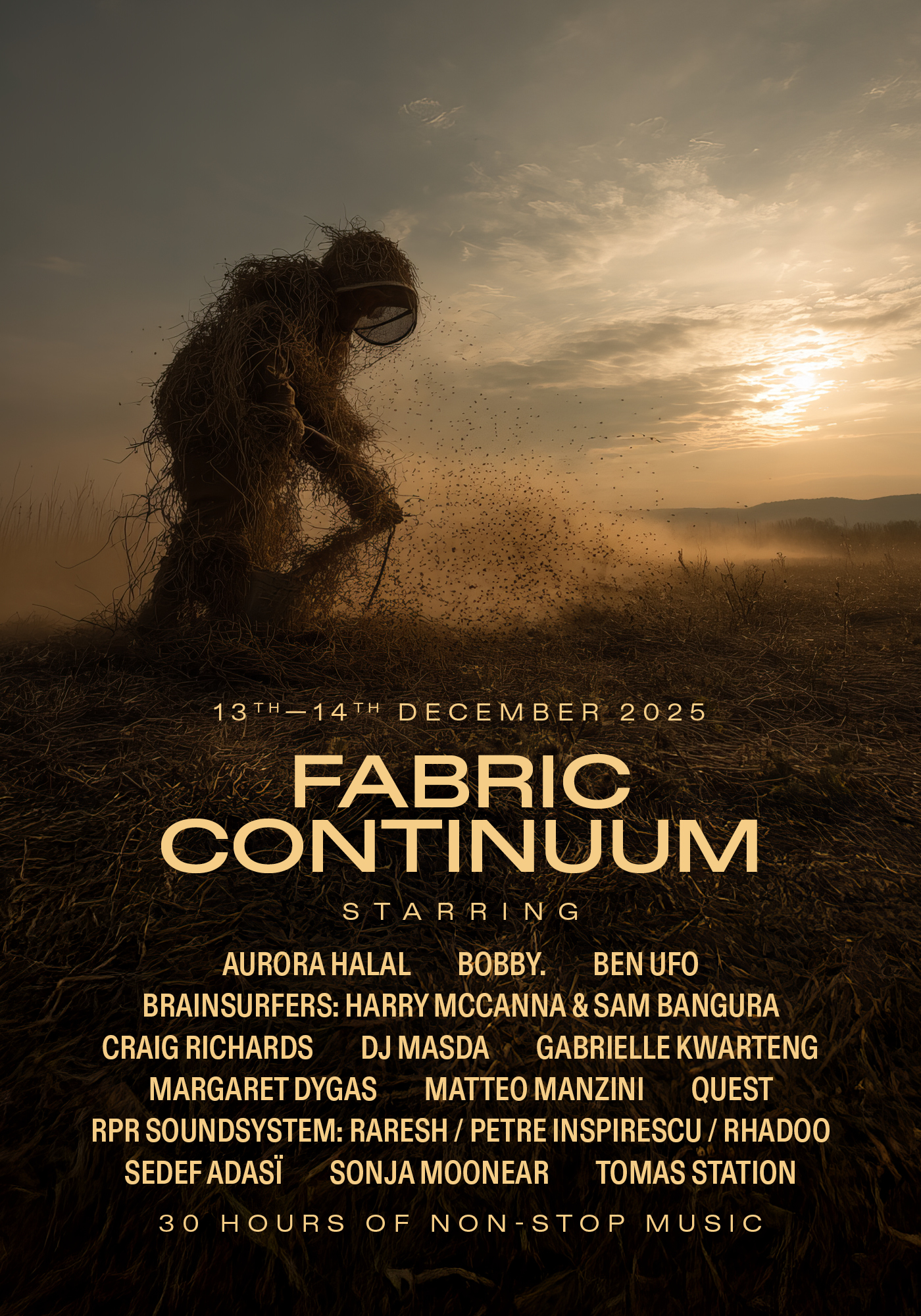
Matteo Manzini has been central to shaping its sound and atmosphere. We caught up ahead of Continuum this weekend to delve deeper into his thought processes behind the set.

What is the approach when playing a Chillout Room set? Obviously you don't feed off crowd reactions as much as with a club set, How do you curate a soundtrack for such a setting?
Some parts overlap with preparing a set for dancefloors, in particular: a) being aware of the physical space/room b) understanding the sound system I will play on. These are always the foundations, in my opinion.
What changes is the fact that with ambient sets I never think in terms of challenging the crowd. My approach is to envision the reason why people would attend the set (whether it’s to relax, socialise, or drift into their own mind for example), in order to hold their hand and walk together towards a comfortable destination.
Within these boundaries, I try to choose sounds that I resonate with, usually far from the more common or mainstream idea of “chill-out music”: even in this niche, the research never stops.
What's the importance of a chillout space in long-form parties like continuum?
The first thing that comes to mind is the need for a dedicated area to take a break during parties, especially if they run for 24/36 hours, like Continuum or the birthday. It gives everyone the chance to reset if needed, and to recharge both mind and body.
Equally important is the opportunity to offer a wider musical experience to people attending fabric, and to show that slowing down can be its own kind of beauty. On this note, since we started this project with Judy two years ago, I’ve been receiving quite a few post party messages, and words like “haven’t experienced anything like that before” are at the top of the leaderboard in terms of frequency.
What stands about the Chillout room in fabric specifically?
First of all, there’s the idea itself of placing it at one of the key points of the club, which is Room 2: chill-out rooms have existed before of course, but they were mostly confined to smaller, secondary spaces. fabric, on the other hand, has brought this project into the spotlight, making it a progressive part of its legacy.
Then there’s the world-class light and sound system, paired with the way we set up the room: sofas, rugs, bean bags, candles and plants, all the elements you’d expect from a true decompression space. Recently we tested a food stall at the back of the room, and the first attempt was a real success. The synergy between the two teams was instant, and I loved how respectfully they worked within the ethos of the room, especially in terms of noise and hospitality towards our ravers.
Last but not least, an artist from the main line-up normally joins to play a special ambient or downtempo set, exploring new territories. That makes the whole experience even more unique.
Ahead of him joining us at the club next weekend for our next continuum, he has put together a podcast of exactly what you would expect to hear in the early hours of Sunday morning.