IWD 2026
Happy International Women’s Day from fabric. The club and label wouldn’t be where they are without all the women involved.
We spoke to a few of the women involved in the recent fabric SELECTS series about who inspires them, what representation means to them, and how they stay motivated.
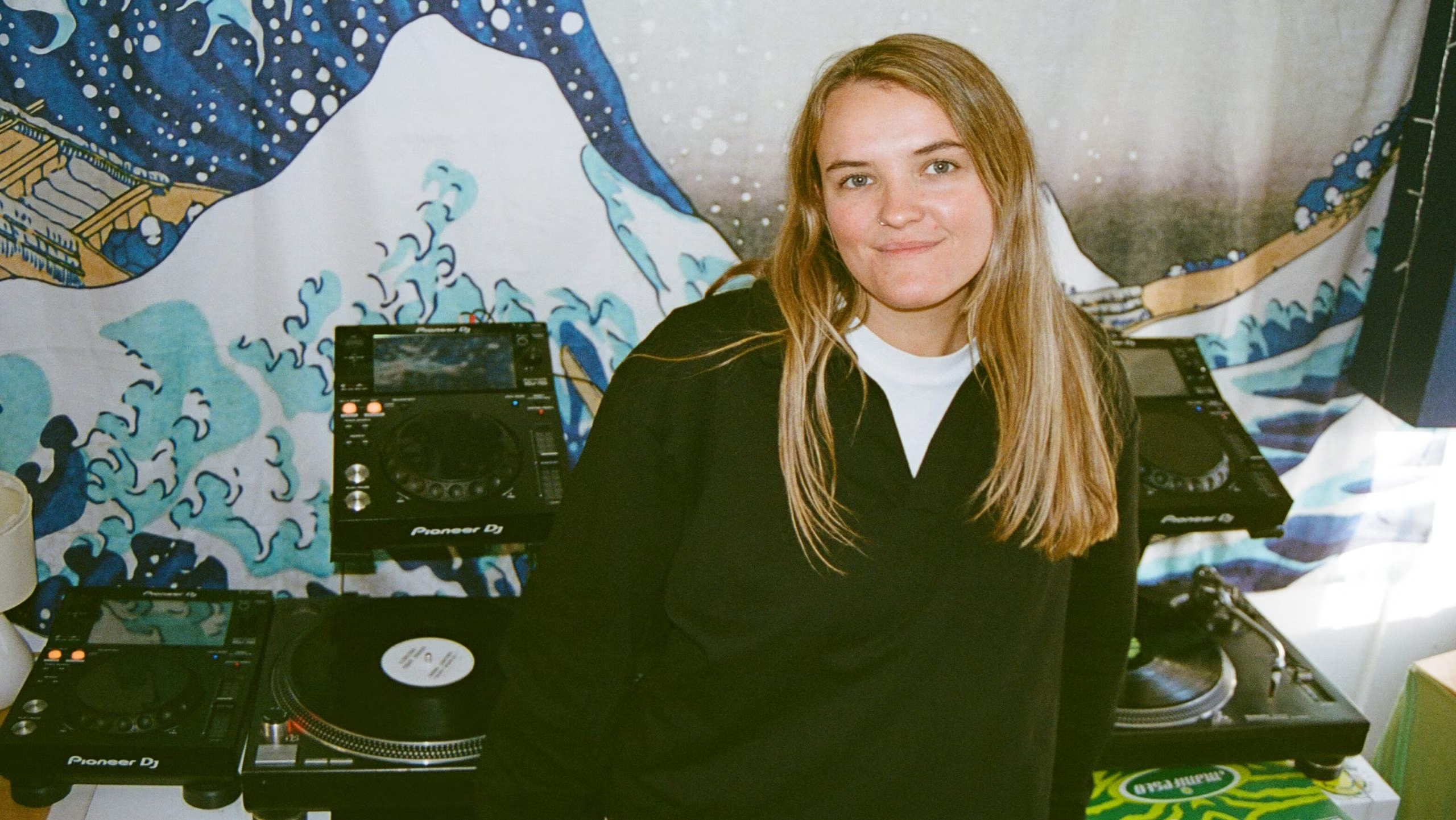
Who were the women (in or outside of music) that influenced your journey?
For me, the woman who has influenced my journey the most, both inside and outside of music, is my mum. She’s the strongest and most amazing woman I know. She raised me on her own after having me at 21, and I often look back and think, how did you do that?
Whenever I’m going through a difficult time or facing a challenge, I think about her or speak to her. She gives me so much strength and belief in myself. She’s always reminded me that I can do what I want to do and that I can get through tough moments. So she would definitely be number one.
Within music, there are honestly so many women who have inspired me. Even when I started DJing about 12 years ago, I was always looking up to female DJs, producers and promoters. I admired their work and their creativity, but it was also about seeing another woman doing the job that I wanted to do. It made it feel possible for me.
Why is representation important in DJ lineups and festival programming and how can promoters, labels, and artists better support women in music?
That’s why inclusivity is so important in our industry, and why we should always be making an effort to support it. Representation makes things feel more accessible and achievable for more people. Ultimately, we want diversity and quality, and that combination makes events far more interesting.
It also helps create spaces that feel safer and more comfortable, which is something we should all be striving for.
If you could collaborate with any female artist (past or present), who would it be?
If I could collaborate with any woman in the music industry, past or present, I would probably choose Shanti Celeste.
She was actually one of the DJs I watched a lot when I was younger, and I found her incredibly inspiring. She was always playing vinyl records, which I thought was really cool, and her music is so groovy. The way she mixes feels really fun and energetic.
Watching her made me realise that I could do that job too, and it encouraged me to start playing more vinyl myself, which I’ve always loved. Collaborating with her would feel like a real full circle moment for me.
What keeps you motivated when things get tough?
When things get difficult, I’m really lucky to have a strong support network around me, mostly women actually. I have an amazing girlfriend, great friends, and of course my mum. I talk to them a lot, especially when I’m struggling with something related to work or the industry.
Just having people to talk to can make a huge difference. It helps you get things out of your head and gain a different perspective, which can make challenges feel much more manageable.
I also think it’s important to talk about imposter syndrome. A lot of women experience it across many industries, and I think the music industry is no exception. Many people deal with it, but for women it can sometimes feel more intense because we’re entering spaces that historically haven’t always been open to us.
That can create a lot of pressure. Pressure to perform, to prove yourself, or to fit a certain mould. There can also be criticism directed at women in the industry, which can make things mentally challenging to navigate.
Sometimes it helps simply to acknowledge that reality. Recognising that we are stepping into spaces that are still evolving can make it easier to understand why things might feel difficult at times.
Beyond having a strong support network, routines also help me a lot. Sleeping well, exercising regularly, eating good food and taking care of myself all make a big difference.
Journaling is another habit I’ve found really helpful. It allows me to get thoughts out of your head, especially when things are swirling around. It’s also a great way to write down the things you’ve achieved and remind yourself of the progress you’ve made.
Taking time to celebrate your own wins, even the small ones, is really important.
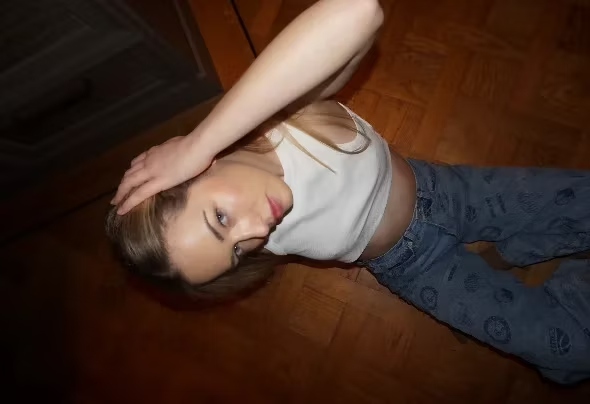
Who were the women (in or outside of music) that influenced your journey?
Hi everyone, this is Kim April, and I want to wish you all a happy International Women’s Day.
The woman who has supported me the most throughout my journey is definitely my mum. She always believed in me and gave me a lot of creative freedom. She taught me to love the process rather than rushing towards the end result or being too hard on myself.
That mindset has really shaped everything for me and the way I approach my work.
Why is representation important in DJ lineups and festival programming and how can promoters, labels, and artists better support women in music?
I love seeing more and more women behind the decks and taking their place in the music industry. It’s really inspiring, and it was one of the first things that made it feel possible for me to pursue this path myself.
I also feel like there’s a growing sense of support between women in the industry, which is really encouraging to see. Supporting each other and lifting each other up is incredibly important.
If you could collaborate with any female artist (past or present), who would it be?
There are so many inspiring woman in the industry, it’s hard to choose one. I’m always excited by artists who push boundaries and bring their own unique perspective to what they do.
What keeps you motivated when things get tough?
For me, staying connected to the process is really important. Remembering to enjoy creating and learning along the way helps keep things in perspective, especially during challenging moments.
I truly believe that supporting one another and celebrating each other’s achievements helps keep that motivation alive.
So let’s keep lifting each other up, and happy International Women’s Day.

Who were the women (in or outside of music) that influenced your journey?
Hi, I’m Kitsta. My musical journey has been influenced by so many amazing women. When I was learning to DJ, it was collectives that really showed me what community looks like. So shout out to Hands On Deck and Shifting Spheres, two collectives that have been championing women from the very beginning.
They taught me that music isn’t just about creating. It’s also about giving back, sharing knowledge, and lifting others up along the way. When you have women like that supporting you, it feels like not much can stop you.
Why is representation important in DJ lineups and festival programming and how can promoters, labels, and artists better support women in music?
Representation is incredibly important. If you don’t see people who look like you behind the decks, in the studio, backstage, or in the positions where decisions are being made, whether in business or policy, then those imbalances will remain firmly in place.
It’s also important that this conversation is approached intersectionally. Women of colour and trans women, for example, are significantly less likely to be represented than their cis white counterparts. Changing that balance takes real intention.
For me, one of the most effective ways to do that is by building on the incredible work that’s already being done and supporting the organisations that are reshaping the industry from the inside out. Two great examples are Saffron Music and Not Bad For A Girl.
Whether it’s providing more funding to help expand their reach, raising awareness about their work, or simply supporting them however you can, it all helps keep the momentum moving in the right direction.
If you could collaborate with any female artist (past or present), who would it be?
If I could collaborate with any woman, past or present, it’s a tough question. But I think I’d go with Clara Schumann.
She was a phenomenal pianist and composer, yet history often remembers her simply as Robert Schumann’s wife. If I could time travel back to the 1800s and bring her into the world of synths and Ableton, I think that would make for a very cool collaboration. It would also be a way of giving her the recognition she truly deserves.
What keeps you motivated when things get tough?
There’s something really powerful about watching women in the scene rise and shine, especially when they’re friends or DJs I’ve supported through my community work.
Seeing those journeys up close is incredibly inspiring. It motivates me to keep going and reminds me why building supportive communities in music is so important.

Who were the women (in or outside of music) that influenced your journey?
Three women have really inspired my journey.
First is my mum. She is the most loving, supportive and wonderful woman you could ever meet, and she has definitely helped me become the person I am today.
The second is DJ Paulette. She has always done exactly what she wanted to do, when she wanted to do it. I find her journey incredibly inspiring, and her story is such a great example for women who want to enter the industry.
The third is Danielle Moore from Crazy P. My first agency was also Crazy P’s agency, so we toured and gigged together quite a lot. Danielle was always the most calming, soothing and supportive presence. She was always there to give me advice and helped me through some difficult moments. I’m incredibly grateful to her for being there for me, and I miss her a lot.
Why is representation important in DJ lineups and festival programming and how can promoters, labels, and artists better support women in music?
Representation is important because it’s difficult to imagine yourself doing something if you never see someone like you doing it.
It’s hard to believe you could become a successful DJ when the only DJs you see are men. You need to know that the path is open to you and that the journey is possible.
That’s why we need more women producers and more women working behind the scenes as well. Seeing women running labels, agencies and other parts of the industry helps show that this space can belong to everyone, even though it has traditionally been seen as a male dominated field.
If you could collaborate with any female artist (past or present), who would it be?
I would absolutely love to work with Sally C and Eliza Rose. Please bring me into the next collaborative EP.
I love their style, their sound and the whole vibe they bring.
What keeps you motivated when things get tough?
When I’m having a rough day, a few things help me reset. I love watching documentaries about people’s journey and how they built their careers in the industry.
Sometimes it’s also important to switch off completely. Turning off my phone and taking a short break or holiday can make a big difference.
When I’m ready to come back, I speak to my peers. Having an honest conversation, venting and sharing experiences really helps, because more often than not you realise that other people are going through exactly the same things.
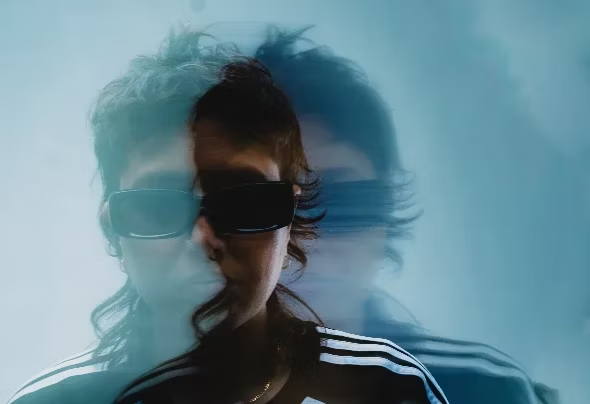
Who were the women (in or outside of music) that influenced your journey
I actually have to start with my mum. She played everything at home, from Arabic music, often accompanied by her belly dancing, to New Romantic and jungle. There were so many different styles of music around me growing up, and that really opened my ears to a huge range of sounds. It taught me to appreciate different genres and musical cultures, and that influence has stayed with me to this day.
Within the music industry, there are so many incredibly talented women. As both producers and DJs, artists like Hannah Holland, Saoirse, Hilit Kolet, Juliet Mendoza, Maya Jane Coles and many others are doing amazing work. There’s just so much talent out there.
I mention these women specifically because they all bring something distinct, fresh and new to the table. The music they create doesn’t necessarily sit inside a box. On the radio side, you’ve got people like Jaguar and Jess Iszatt, who have both been incredibly supportive of my music over the past three years. Hearing my tracks played on platforms like BBC Introducing has given me so much confidence to keep producing and putting my music out there. So thank you, I really appreciate it.
Why is representation important in DJ lineups and festival programming and how can promoters, labels, and artists better support women in music?
Representation matters because I don’t just want to hear a male perspective when someone is telling a story through their DJ set. I want to hear a female perspective. I want to hear the perspective of someone who is non-binary, trans, or part of the LGBTQ+ community. Different voices bring different stories, and those perspectives deserve to be heard.
Even within the same genre, hearing it through the lens of different people keeps things fresh, exciting and inclusive. That diversity is really important for the culture.
For promoters and bookers, it’s about looking beyond the obvious or “safe” options. It’s not necessarily about taking a risk, it’s about broadening your horizons and exploring emerging talent. And within that pool, making sure women, people of colour and artists from queer backgrounds are represented.
No one wants to hear the exact same perspective at every event or festival. At the end of the day, it becomes a bit boring.
In terms of practical solutions, that’s slightly outside my direct experience because I’m not a promoter, I don’t run a label, and I don’t organise events. But some things are already happening that help, like festivals running competitions to discover emerging talent, or booking agencies developing new artists.
However, I think there’s also value in looking beyond the agency system. Many independent artists haven’t yet reached the level where they have booking representation. There’s a middle stage where artists aren’t quite new enough to enter beginner competitions, but they’re also not established enough to have agents. That group of artists can often struggle the most to get noticed in the industry.
A good example of a label encouraging female talent is fabric. If you look at the latest fabric compilation, there’s a really healthy number of female producers included. It doesn’t feel like a token exercise either, everyone involved brings something genuinely high quality and unique to the project. That’s what makes it work.
We simply need more labels actively seeking out and engaging with female artists. When that happens, you end up with bodies of work like the fabric compilation, projects that feel fresh, balanced and genuinely exciting.
If you could collaborate with any female artist (past or present), who would it be?
There are a lot of artists I’d love to collaborate with, but Hannah Holland would definitely be high on that list. Not just because of the resurgence of the “Reebok” tune, I actually messaged her long before that happened. To me, she’s an icon and an absolute legend.
She’s always brought something fresh to the table throughout her career, and I’d love the opportunity to sit in the studio with her, see how her mind works and understand her creative process. I think I’d learn so much from that experience.
What keeps you motivated when things get tough?
Things can definitely be tough when you’re balancing music with a nine-to-five job, which I do. Both require a lot of mental energy. Your day job is mentally demanding, and producing music is mentally demanding too.
The biggest challenge is finding the time and motivation to keep going when you only really have evenings and weekends available. For most people, that time is their downtime. But if you’re an artist with a full-time job, there’s often no real downtime, you have to make the time.
Juggling both can be difficult, but it’s something many independent artists deal with.
One thing that helps me a lot is going to the gym. I have a bit of an on-and-off relationship with it, but when I’m consistent, the benefits are huge. It clears my mind, helps me focus, and sets me up for the day and the week ahead.
Even simple things like getting outside, walking, moving your body, eating well and taking care of yourself make a big difference. Everyone says it, but once you actually start doing it, you really feel the impact.